
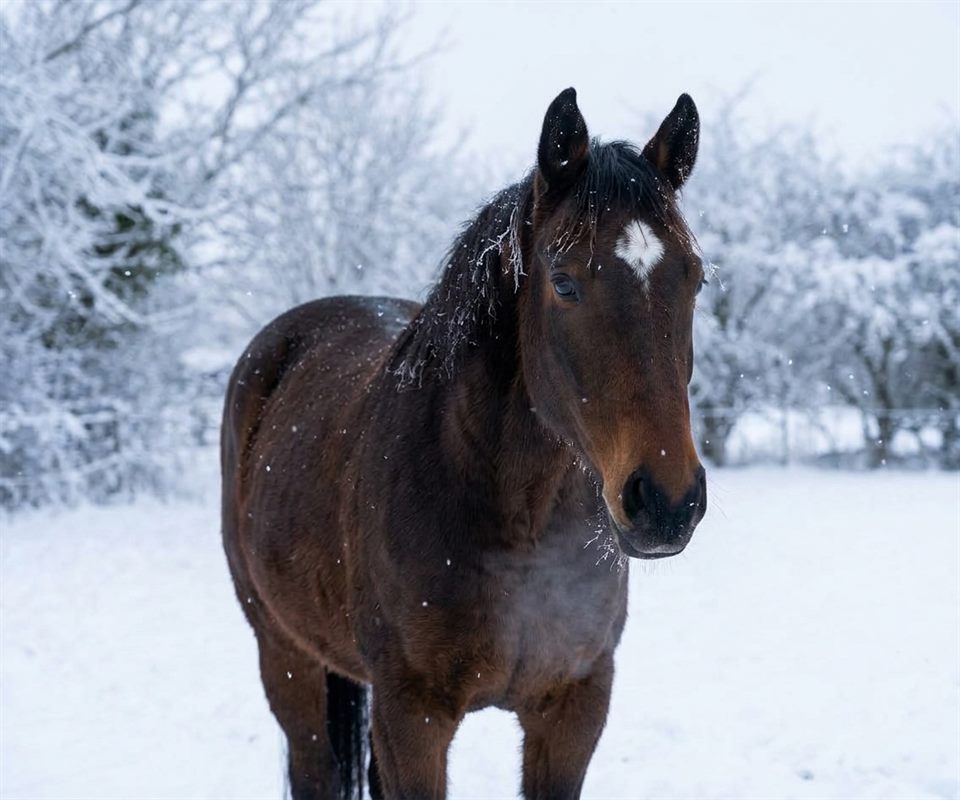
- Forage keeps a horse warm from the inside as it's digested. Give extra hay when the grass runs short, with more piles than there are horses.
- An average horse drinks 3–4 buckets of water a day. Check for ice at least daily and keep an emergency supply in case taps freeze.
- Weigh-tape and fat score every two weeks. Losing a little weight over winter is natural, and useful for a horse that's overweight.
- Wet, mud and more time indoors raise the risk of mud fever, rain scald, thrush and equine asthma.
- Get your horse out every day, even if turnout is shorter. Don't ride out on slippery roads, in the dark or in poor visibility.
A healthy horse with a winter coat, plenty of forage, water and shelter is well equipped for a British winter. Most of the work is in making sure those basics don't run out, and in watching for the problems that wet, cold weather brings.
Forage and feed
Forage should be the base of your horse's diet all year. The BHS explains that horses evolved to chew for up to 18 hours a day, and that digesting forage helps keep them warm. When grass is scarce, put out extra forage in the field:
- Put out more piles of hay than there are horses, so everyone gets a fair share.
- Hay feeders keep hay off muddy ground, cut waste and make eating cleaner.
- Keep hay and feeders away from water troughs and gateways, which get muddy and worn quickly.
Does your horse need more? Many leisure horses do well on forage alone, but the BHS says it's hard to know whether they're getting enough vitamins and minerals without testing the forage, so a balancer or a vitamin and mineral supplement can help. Bucket feed (concentrates) may suit older horses that struggle to chew forage, or horses losing weight they can't afford to lose. Ask a nutritionist so you don't overfeed, and feed concentrates little and often: the BHS warns that a large meal can pass into the large intestine undigested and raise the risk of colic. See feeds and supplements.
Water
The BHS says an average horse drinks 3–4 buckets of water a day. Too little water can slow the gut and raise the risk of impaction colic.
- Check the water supply for ice every day, as the BHS's pasture advice says, and break it.
- Keep an emergency supply of clean water in case the taps freeze.
- Adding warm water to buckets can stop them freezing and encourage your horse to drink.
- Insulate the pipes to automatic drinkers, or keep spare buckets.
Weight
Use a weigh tape and fat score your horse every two weeks, says the BHS. Weigh tapes vary in accuracy, but they show whether your horse is keeping, losing or gaining weight. A weighbridge gives an accurate weight; vets or feed companies may offer weighing.
Losing some weight over winter is natural. Bransby Horses suggests using the winter months to bring an overweight horse's weight down, ready for the spring grass. If a horse loses too much, look at its forage first. See weight and fat scoring.
Rugs and clipping
Horses don't feel the cold as we do, and they grow a thick winter coat, so decide whether your horse really needs a rug. Bransby Horses notes that over-rugging stops a horse using its body fat to keep warm, and suggests a rug if you see your horse is cold. If your horse isn't rugged, don't over-groom it: the BHS says that strips the natural oils that waterproof the coat. Still brush mud off where tack sits, so it doesn't rub.
A horse in winter work can overheat under a thick coat, and sweat trapped in the coat can leave it chilled or sore. Clipping helps it cool down faster after work. If the back and quarters are clipped, an exercise sheet can help in wet or very cold weather. Clipping and rugging covers when a rug helps, which one, and the signs of a horse that's too hot or too cold.
Mud, skin and breathing
The BHS says wet, muddy conditions and more time indoors raise the risk of mud fever, rain scald and equine asthma. Check the legs and coat closely as you groom for the first signs of skin problems, and keep stables clean and well ventilated (see bedding and mucking out). Wet weather also churns up fields: field shelters and living out has the BHS's advice on managing mud.
Feet
Winter brings its own hoof problems, says the BHS:
- Thrush. Wet, muddy conditions make thrush, a bacterial infection of the frog, more likely. Pick out the feet every day and keep up regular trimming.
- Soft feet. A hoof wall that takes up too much moisture softens. Give your horse hardstanding out of the mud, or bring it in for some of the time so the feet can dry out.
- Abscesses. Hooves expand and contract as the weather changes, which may trap bacteria. Sudden, severe lameness can be an abscess: call your farrier or vet.
- Snowballing. Wet, dense snow can pack into the feet, leaving the horse standing on a frozen lump. This can bruise the sole, cause slips and strain tendons and ligaments. Ask your farrier whether to take the shoes off if your horse is doing less work, since snow packs more easily onto cold metal shoes. Petroleum jelly or hoof oil inside the shoe and on the sole may help for a short while, and hoof boots or snow pads can keep snow out if they fit well and are taken off every day.
- Keep the farrier booked. Hooves grow more slowly in winter, but the BHS says that's no reason to skip visits.
See hoof problems for more.
Turnout, shelter and stabling
Turnout may need cutting down in winter to protect the fields, but the BHS says it's still important for horses to get outside every day. Horses at grass need shelter: thick hedges, tree lines or a field shelter. Trees that lose their leaves give little shelter in winter, and any trees or hedges must not be poisonous. The BHS adds that yew isn't usually eaten but may be when other forage is short, such as in winter.
Bransby Horses says many owners bring horses in at night in winter, but that isn't always necessary and doesn't suit every horse. If your horse does come in for winter, make the change gradually over 10–14 days, says the BHS, to reduce the risk of colic. Long hours in a stable can lead to boredom, stress and unwanted habits, so add enrichment and get your horse out every day. Time out can be hand walking, lungeing, riding, driving, turnout in an arena or a horse walker. See life in the stable.
Worms
Worm egg counts are often not used over winter, the BHS explains, because the larvae of small redworm can lie buried (encysted) in the gut wall. As spring warms up they can emerge in large numbers, which can do serious damage. Your prescriber will advise whether your horse needs a blood test or a winter worming treatment.
Exercise, ice and poor light
Short days make it harder to keep a horse fit. Some owners give their horses a rest or ride less over winter; the BHS says this should be managed carefully. Its advice for cold weather:
- Grit concrete areas around the yard so neither you nor your horse slips.
- Don't ride out on slippery surfaces or in poor visibility. The BHS doesn't recommend going out at night at all.
- Frozen fields and some arenas can be very hard. Find softer ground, or work mostly in walk to limit the jarring on the legs.
- Choose exercise to suit your horse's temperament and the weather.
When you do ride out, the BHS recommends hi-vis and lights in every season: at least a hi-vis jacket or tabard for you and leg bands for your horse, and LED lights wherever possible.
Sources
- Winter care — The British Horse Society (accessed 9 October 2026)
- Pasture management — The British Horse Society (accessed 9 October 2026)
- Winter hoof care — The British Horse Society (accessed 9 October 2026)
- Risk-based worm control in horses — The British Horse Society (accessed 9 October 2026)
- Hi-vis — The British Horse Society (accessed 9 October 2026)
- Poisonous plants — The British Horse Society (accessed 9 October 2026)
- Winter management — Bransby Horses (accessed 9 October 2026)
- Tips for weight management — Bransby Horses (accessed 9 October 2026)